

Choosing a trustee is a key consideration when establishing a trust, whether it is a stand-alone financial solution or you are forming it under your will as part of your estate planning. Yet, the decision can be challenging, and it is normal to have questions or concerns about who you appoint. Exploring a trustee’s role and different types of trustees can help you make a more informed decision.
What Is a Trustee, and What Role Do They Serve?
A trustee is a third party appointed by a trust instrument or agreement to oversee the administration of a trust. They serve as fiduciaries, which means they must always follow the trust’s intentions and instructions and act in the best interests of its beneficiaries.
As part of their duties, a trustee may:
- Dispose of property.
- Ensure beneficiary payments.
- Allow discretionary distributions to beneficiaries under the trust agreement.
- Oversee prudent management of investable assets.
- Coordinate with accounting professionals.
- Engage an attorney.
- Hire professionals to carry out specific directives, such as contracting a realtor to sell property titled to the trust.
While trustees often work with others to administer the trust, they generally cannot delegate their administration duties to another fiduciary, such as their Power of Attorney. Trust agreements typically appoint a successor trustee who can step in if the original trustee becomes incapacitated or is unwilling to serve. Otherwise, petitioning the court is usually necessary to appoint a new trustee.
Considerations When Choosing a Trustee
When considering how you choose a trustee, there are several aspects to evaluate.
Longevity
Longevity jointly refers to the trustee’s ability to serve throughout and the trust’s expected lifespan. The longer the trust is anticipated to last, the more important longevity becomes.
For example, a trust with a 20-year-old beneficiary directing full distribution at age 30 has a much shorter lifespan than a dynasty trust intended to span generations. Appointing a trusted friend or family member for the former may be adequate. Conversely, a dynasty trust will need a comprehensive succession plan across several generations and decades.
As a result, it is essential to consider factors like age, health, and willingness to serve and balance these carefully with your intention of how long assets remain in trust. Communicating your lifespan wishes to your attorney as they draft your trust instrument helps ensure proactive succession planning.
Impartiality
Trustee impartiality is essential to upholding integrity, fairness, and transparency in a successful trust administration. Without this trait, trustees could undermine the trust’s intentions to the detriment of beneficiaries. An objective, impartial trustee is better able to:
- Navigate complex beneficiary dynamics: Every trust beneficiary is entitled to equitable treatment, but trustees who have close emotional bonds or conflicts with particular beneficiaries could inadvertently engage in favoritism.
- Adhere to the grantor’s wishes: An impartial trustee can carry out the grantor’s intent faithfully without allowing external pressures or personal beliefs to interfere.
- Prevent disputes and litigation: Removing friends or family as trustees can help avoid family conflict and legal actions. An impartial trustee can uphold fair and consistent decisions and preserve harmony between beneficiaries.
- Document careful decision-making: Impartial trustees can record their objective logic to support their choices.
Financial Responsibilities and Expertise
Trusts often present unique and complex financial responsibilities requiring in-depth administration expertise. The more assets a trust holds, the greater the risk the trustee must carefully manage. An inexperienced or unknowing trustee’s misstep can result in financial damage and legal actions brought by beneficiaries.
For example, an improperly supervised investment advisor could invest in higher-risk assets, potentially leading to capital losses and eroding the trust’s principal. Beneficiaries could allege a breach of the fiduciary Duty of Prudence, which requires trustees to be critically aware of all risks.
Different Types of Trustees
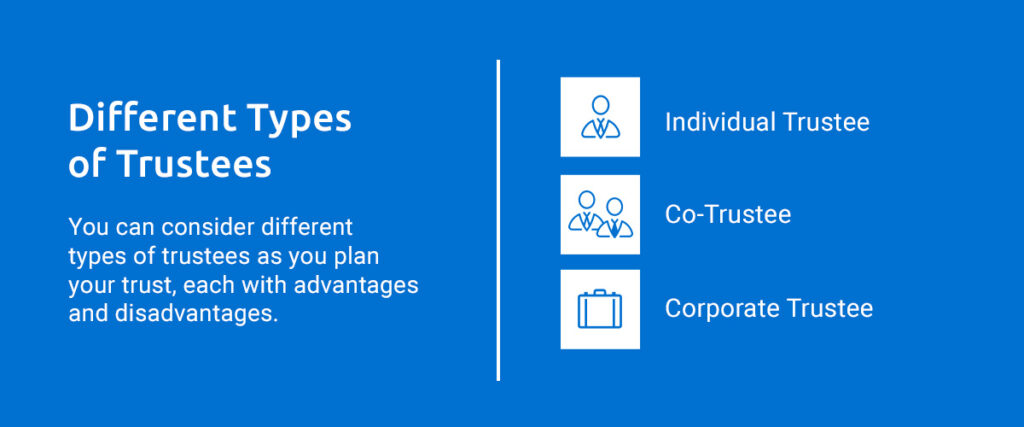
You can consider different types of trustees as you plan your trust, each with advantages and disadvantages.
Individual Trustee
An individual trustee is a single person who could be a family member, friend, neighbor, or trusted advisor. The benefits of naming an individual trustee include:
- Understanding: These individuals often have a deeper, personal understanding of what matters most to you. That bond can help when considering discretionary distributions, as the trustee is familiar with your philosophies and values.
- Humanity: A trustee that beneficiaries know personally adds a human touch to the relationship. That can support more open communication versus a corporate trustee bound by strict protocols.
- Lower costs: Trusts with an individual trustee may be less expensive to set up and administer, preserving more assets for beneficiaries. If administration is simpler and less time-consuming, these trustees may also be willing to serve with minimal compensation.
Conversely, appointing an individual trustee has several drawbacks, including:
- A lack of expertise: Despite their close ties with your beneficiaries, an individual trustee may lack the required expertise to administer the trust successfully. Mistakes or ongoing dependence on outside advice can lead to substantial losses.
- Personal liability: Trustees can be held personally liable for breaches of fiduciary duty, even when unintentional. If legal challenges are successful, their personal assets are at risk.
- Issues with impartiality: A close friend or family member’s personal relationships with your beneficiaries could introduce favoritism and compromise impartiality.
- Time commitments: Complex trusts are time-consuming. Not every individual trustee has the necessary time to devote to administration, which could lead to oversights and improper administration.
Co-Trustee
A co-trustee approach is similar to an individual trustee, except that you appoint more than one trustee. The benefits of naming co-trustees include:
- Complementary skills: Differing skills can avoid the knowledge gaps of selecting an individual trustee.
- Division of duties: Your trust agreement can authorize one trustee for certain tasks, ensuring availability for time-critical administrative issues.
- Elimination of bias: Two or more trustees can better safeguard against bias, upholding fairness and integrity for beneficiaries.
- Better decision-making: Multiple perspectives can help ensure consideration of critical issues that a single trustee could overlook.
The disadvantages of co-trustees include:
- Potential for disagreement: If all trustees cannot agree on decisions, there is a high potential for administrative deadlock that prevents carrying out the grantor’s wishes.
- Damaged relationships: Trustees who were previously on good terms may find that conflicts in trust administration strain those bonds.
- Higher costs: The need for professional advisors like attorneys and accountants to communicate and coordinate between multiple trustees can increase administration costs, decreasing assets available to beneficiaries.
Corporate Trustee
Corporate trustees are partners that offer professional trust administration services, like law firms, banks, and trust companies. They offer advantages you cannot get with individual or co-trustee arrangements, including:
- Specialized, in-depth expertise: Corporate trustees have extensive trust administration knowledge, ensuring competent and comprehensive management, even for more challenging and complex trusts.
- Adherence to high standards: Experienced corporate trustees extensively understand the duties expected of fiduciaries and strictly adhere to them. Additionally, these trustees are subject to state and federal laws and frequent audits to ensure regulatory compliance.
- Objectivity: Since corporate trustees are impartial, they can administer the trust fairly, consistently, and without the bias that a friend or family member may have. Plus, they can help maintain harmony among beneficiaries by making difficult decisions when needed.
- Continuity: A corporate trustee will always have a dedicated trust administrator available to ensure seamless, uninterrupted administration.
There are also potential disadvantages to consider when working with corporate trustees. These trustees charge a fee for their services, typically a percentage of assets under management (AUM). Costs may be slightly higher than the compensation an individual trustee or co-trustees would accept. Beneficiaries may perceive the relationship as impersonal or inflexible due to rigid adherence to rules. Additionally, decision-making may be multilayered and slower-paced than that of an individual trustee.

Learn More About Corporate Trustee Services From Peninsula Bay Trust Company
Peninsula Bay Trust Company is an experienced provider of corporate trustee services with extensive expertise in intricate trust administration and revolutionary strategies for challenging trusts. We proudly serve individuals throughout California from our headquarters in Burlingame. As your partner, we collaborate closely with you to design a personalized solution for carrying out your wealth transfer directives, regardless of complexity. We will also coordinate with your other trusted advisors, including your legal counsel, tax professional, and investment manager, to uphold your intentions and wishes.
We invite you to explore how we can help — call our expert team at 650-484-5105 or connect with us online to start a conversation.
